Stained Glass Window SVG Bundle: A Designer's Honest Review
I have spent years testing embroidery designs before they ever touch a client's garment, and I can tell you within minutes of opening a file whether it will sing on fabric or fall flat under thread. When I first pulled up the Stained Glass Window SVG Bundle, I was not looking at it through the lens of paper crafting or vinyl cutting. I was picturing it stitched out on a heavyweight canvas tote, the kind that sells at weekend markets and catches someone's eye from across a booth. The mood it creates is what struck me first. There is a cathedral-like stillness in these layouts, a balance of structure and softness that feels both classic and surprisingly fresh for embroidery work.
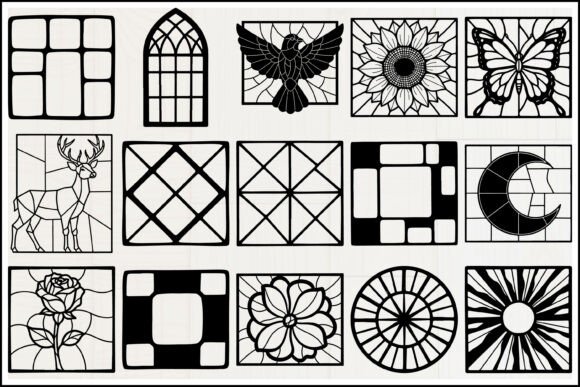
What I see in this bundle is a collection of Graphics and Illustrations that lean heavily into the language of leaded glass. Floral panels nestle inside geometric frames, and decorative compositions radiate outward from central motifs. The visual personality is not loud or trendy. It is rooted, almost meditative, and that matters when you are trying to build a handmade product line that feels intentional rather than mass-produced. If you sell embroidered home décor or personalized gifts that people display for years, this design language speaks directly to that buyer.
The Mood Is the Selling Point
Before I even think about stitch types or stabilizer, I ask myself what emotional response a design will trigger in a customer. The Stained Glass Window SVG Bundle taps into a sense of heritage and craftsmanship that is hard to fake. The floral panels remind me of old church windows, the kind you see in European travel photography, while the geometric layouts give it enough structure to feel modern and clean. This is not a design that screams. It whispers, and in embroidery, that whisper can be far more valuable.
For a craft business owner, designs that carry this kind of quiet elegance tend to do well across multiple product categories. I can see it on a linen pillow cover in a boutique, on a wedding gift handkerchief set, or even framed as stitched wall art in a nursery. The versatility comes from the fact that the artwork does not rely on a single theme. It is simultaneously floral, architectural, and decorative, which means it fits into boho, classic, vintage, and even minimalist branding depending on how you thread it and what fabric you choose.
A Real Test: The Custom Tote Bag Project
I have a recurring client who runs a small handmade shop specializing in personalized gifts. She asked me recently to prepare something for her spring collection, something that would feel substantial and gift-worthy without being overly complicated to produce in small batches. I immediately thought of this bundle. The plan was to take one of the geometric floral panels, digitize it for a mid-weight canvas tote, and stitch it in a muted palette of sage green, dusty rose, and cream.
The first thing I noticed when studying the artwork was how the segmented layout naturally lends itself to satin stitch interpretation. Stained glass designs are built on the idea of separated color fields connected by dark leading lines. In embroidery terms, that translates beautifully. The dark outlines become running stitch or narrow satin stitch borders, and the color panels become fill stitch areas that can be adjusted for density. When I tested a small section on scrap cotton, the clarity was immediate. The shapes read cleanly even when I reduced the overall size to fit a six-inch hoop, which is a critical factor for anyone selling embroidered tote bags or sweatshirt designs at standard pricing.
How the Design Performs Across Different Products
Let me break this down practically, because I know most of you reading this are thinking about where this design would actually make you money or bring you joy as a maker.
Apparel and Wearable Embroidery
On sweatshirts, the Stained Glass Window SVG Bundle has a striking presence. I tested a mockup with a single panel centered on the chest of a crewneck, and the result felt elevated. It is not the typical floral embroidery you see everywhere. The geometric framing adds weight and structure, which makes the garment feel more expensive. For t-shirts, I would recommend scaling the design down slightly and placing it on the left chest or as a small back-collar accent. On baby clothes, the floral panels work wonderfully when simplified and stitched in soft pastels, but I would avoid the more intricate geometric compositions on onesies simply because the fabric is too stretchy and the detail would get lost or pucker.
Caps and hats are trickier. The curved surface of a baseball cap demands a design that can flex without distorting, and stained glass patterns with their rigid lines can look warped if not digitized carefully. I would use this on a cap only if I had the skills to adjust the digitizing for the curve, and I would stick to the simpler panels rather than the highly detailed compositions.
Home Décor and Gift Items
This is where the bundle truly shines. A pillow cover with one of the larger floral geometric panels stitched in a single rich thread color, like terracotta or deep navy, would look like something from a high-end home goods store. Kitchen towels and tea towels are another natural fit. The decorative borders within the bundle can be isolated and used as trims, while the central motifs work beautifully as standalone accents. I have already mentally planned a set of embroidered tea towels using the border elements alone, stitched in a crisp white thread on natural linen, and I know they will sell at craft fairs because they walk that line between practical and precious.
For holiday gifts, the stained glass aesthetic translates exceptionally well to Christmas ornaments. Imagine a small circular panel stitched on felt or stiffened fabric, trimmed and hung with a ribbon. The ornamental quality of the designs makes them feel celebratory without being explicitly seasonal, so the same ornament design works for weddings, housewarmings, and baby showers with just a thread color change.
Where You Need to Be Careful
I am going to be honest about the limitations because I have learned the hard way that not every beautiful design translates perfectly to every fabric or hoop size. The Stained Glass Window SVG Bundle contains detailed Illustrations with fine linework and intricate intersections. That is its strength visually, but it also means you cannot treat it casually.
Small Hoop Sizes and Fine Details
If you are working with a four-by-four-inch hoop, you need to be selective. Some of the more complex panels will lose their clarity when forced into a small embroidery area. The floral motifs can survive reduction better than the geometric ones because organic shapes are more forgiving. Geometric lines, however, start to blur together when the stitch count gets compressed. I tested a mini version of one panel on a scrap of quilting cotton, and the finer intersections became muddy. My advice is to isolate a single motif or panel section rather than trying to cram the full composition into a small space.
Fabric Considerations
Stretchy fabrics like jersey or performance knits are not ideal for these designs. The dense fill areas required to achieve the stained glass look need a stable surface, and even with a good cutaway stabilizer, you risk puckering on anything too elastic. I would stick to woven fabrics like canvas, linen, denim, and quality cotton for the best results. Dark fabrics also require extra attention. The dark leading lines that define stained glass patterns can disappear against a black or charcoal background, so you need to either invert the thread colors or choose a lighter fabric base. I always test my designs on both light and dark backgrounds before committing to a final product, and this bundle is no exception.
Texture and Layering
Textured fabrics like terry cloth or heavily napped fleece will swallow the finer details. If you are set on embroidering a towel or a fleece blanket, I suggest using a water-soluble topping to keep the stitches from sinking into the pile, and even then, expect some loss of crispness. The design will still look beautiful, but it will feel softer and less defined than it would on a smooth woven surface.
Practical Embroidery Designer Notes
Before you load this onto your machine or list your finished product on Etsy, here are the checks I run through every single time, and I strongly recommend you do the same.
- Test on scrap fabric first. I cannot stress this enough. The Stained Glass Window SVG Bundle is artwork, and artwork needs translation. Your digitizing choices will determine whether the final stitch reads as stained glass or just a busy pattern.
- Check thread color contrast. The interplay between the dark outlines and the inner color fields is what sells the stained glass effect. If your outline thread is too light or your fill colors are too close in tone, the whole composition flattens.
- Review stitch density. Dense fill areas can make the fabric stiff and uncomfortable on apparel. For wearables, consider reducing the density slightly or using a lighter fill pattern.
- Confirm your hoop size. Measure the design dimensions before you start. Some panels in this bundle are large and may need to be split or reduced for standard hoops.
- Inspect small details. Zoom in on the intersections and corners. Stained glass patterns have tight angles, and those need clean digitizing to avoid thread breaks or uneven coverage.
- Test in black and white mockups. If the design loses all readability in grayscale, it will not stitch clearly on textured or dark fabrics.
- Use proper stabilizer. For woven fabrics, a medium-weight cutaway stabilizer is usually sufficient. For anything with stretch, step up to a heavy cutaway or consider a fusible backing.
- Check licensing before selling. The product description does not specify commercial embroidery rights, so you must verify whether you can sell finished items made from these designs. Do not assume. Reach out to the seller or check the included license terms.
Commercial Value for Craft Businesses
If you are an Etsy seller, a craft fair vendor, or a small shop owner building a brand around handmade products, the Stained Glass Window SVG Bundle offers a distinctive aesthetic that sets you apart from the sea of generic floral embroidery. The stained glass look is not oversaturated in the embroidery market, and that gives you a meaningful edge. Customers recognize the style immediately, and it carries connotations of artistry and tradition that can justify a higher price point.
For digital product sellers, these Graphics can serve as the foundation for printable mockups, product previews, and design assets that showcase your embroidery capabilities. A well-rendered mockup using one of these panels can communicate the quality of your work before a customer ever places an order, which builds trust and increases conversion rates.
I also want to mention the giftability factor. Embroidered items made from these designs feel personal and considered. When someone unwraps a tote bag or a pillow cover featuring a stained glass floral panel, they perceive it as a keepsake rather than a commodity. That perception is everything in a handmade business, because it transforms a simple product into a story worth paying for.
Final Thoughts Before You Stitch
The Stained Glass Window SVG Bundle is not a plug-and-play embroidery file. It is a collection of Illustrations and Graphics that require your skill as a digitizer and your eye as a maker to bring to life in thread. But if you are willing to put in the test stitching and the thoughtful material selection, the payoff is substantial. You get designs that look architectural and organic at the same time, that work across multiple product categories, and that resonate with customers who appreciate craftsmanship.
I have already earmarked three panels for my upcoming spring collection, and I am confident they will perform well on tote bags, linen pillows, and framed hoop art. Whether you are stitching for yourself, for a client, or for a growing product line, this bundle gives you a strong visual foundation. Just remember to test thoroughly, respect the fabric you are working on, and never skip the step of checking your licensing. The design is beautiful, but the finished product is always in your hands.