Rose Hair Woman Line Art
A Quiet, Confident Statement—Not a Busy Decoration
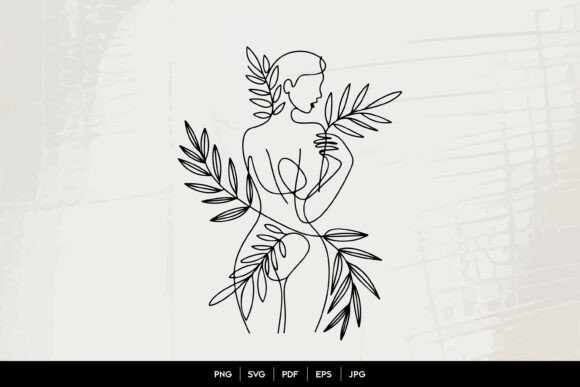
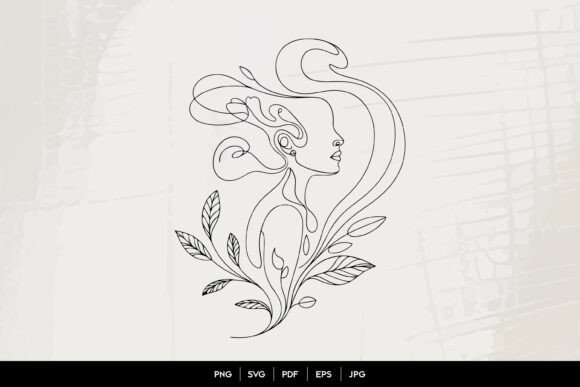
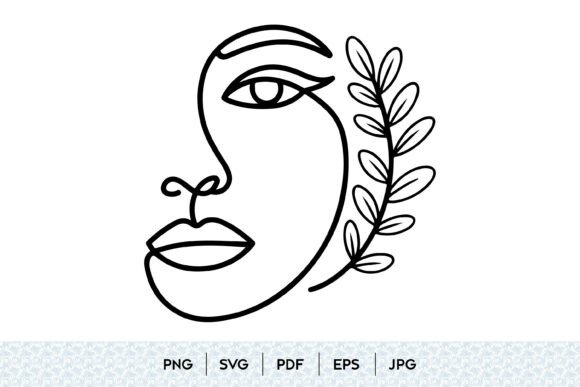
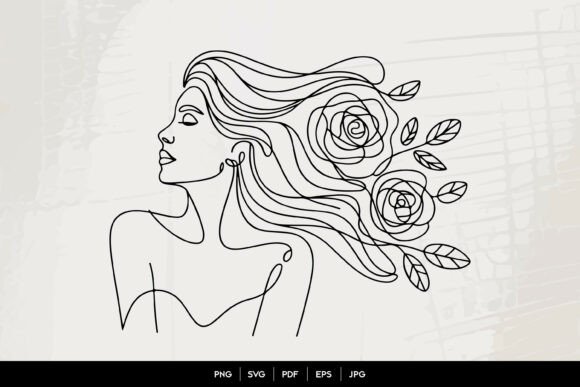
First glance at Rose Hair Woman Line Art isn’t about flash—it’s about presence. The continuous line flows like breath: one unbroken contour tracing the curve of a jaw, the swell of a cheek, the gentle turn of a shoulder—and then, seamlessly, into the curling stem and unfurling petals of a rose woven through her hair. It’s not floral clutter; it’s floral intention. As an embroidery designer who’s stitched hundreds of portraits and botanical motifs, I immediately sensed this wasn’t made for dense fill stitches or heavy satin borders. It’s built for elegance in restraint—ideal for a machine embroidery design that speaks softly but stays memorable.
Where It Shines: Real Projects, Real Reactions
Last week, I prepped a custom embroidered tote bag for a local boutique owner—soft natural canvas, medium-weight, meant for weekend farmers’ markets and gift-giving. I chose Rose Hair Woman Line Art as the focal point, centered just below the top seam. Why? Because customers paused. Not to read text, but to *look*. The line art translated beautifully into a clean running stitch outline (3x passes, 0.6mm width), with subtle satin-stitched rose petals added manually only where needed. No fill. No background. Just confident line and thoughtful negative space. That simplicity made it feel handmade—not mass-produced—and elevated the whole product.
It works equally well on sweatshirt embroidery (use light tear-away stabilizer + reduced density), baby embroidery (on organic cotton onesies, keep stitch count low and avoid tight corners near seams), and even delicate pillow covers where visual weight matters more than texture. I’ve also used it as a standalone embroidered patch—heat-applied backing, small hoop size—and it held crisp detail without fraying or thread nesting. For Etsy sellers and small shop owners, that’s gold: one design, multiple high-perception applications, minimal rework.
Where to Proceed Thoughtfully
- Small hoop sizes: The full composition fits comfortably in a 4x4 hoop—but if you’re stitching only the face or only the rose, isolate those elements first. The continuous line means cropping mid-flow can break rhythm.
- Textured or stretchy fabric: On terry cloth towels or ribbed knit caps, the fine line may blur slightly. Test with a lighter thread weight (e.g., 60wt) and slightly increased stitch spacing.
- Dark fabric: The design relies on contrast. On charcoal or navy, use bright ecru, blush, or deep burgundy thread—not black. A black-on-black line disappears; intention gets lost.
- Curved surfaces: Caps and mugs (for printable mockups) need slight distortion adjustment. The original vector files (SVG, EPS, PDF) make that easy—but don’t skip the test sew.
- Frequent washing: Avoid tight satin-stitched petals on items like kitchen towels. Stick to running or stem stitch outlines—they hold up longer and soften gracefully over time.
What It Adds—Beyond the Stitch
Rose Hair Woman Line Art doesn’t shout “crafty.” It whispers “considered.” That distinction matters—for your brand consistency, your customer’s perception of value, and how seriously your handmade product is received. When a bride orders personalized robes with this design stitched in ivory thread, she’s not buying decoration. She’s buying quiet symbolism: beauty, growth, soft strength. When a craft fair shopper picks up a linen apron featuring this illustration, they’re responding to its calm confidence—not just its prettiness.
That resonance translates directly to buyer engagement. Listings with this design in clean mockups (especially black-and-white or muted-tone backgrounds) consistently outperform busier, trend-chasing illustrations. Why? Because it feels timeless—not tied to a season or algorithm. And for digital product sellers: the included SVG, PNG, EPS, JPG, and PDF files mean you can drop it straight into Canva templates, Procreate brushes, or embroidery digitizing software without rebuilding from scratch. It’s versatile design assets, not just pretty pictures.
Practical Notes Every Embroidery Designer Should Check
- Always test Rose Hair Woman Line Art on scrap fabric matching your final project’s weight and weave—even if you’ve used it before. Thread tension shifts with humidity, needle wear, and machine calibration.
- Review stitch density in your embroidery software. If converting from vector, avoid auto-fill defaults. This design thrives on air—not saturation.
- Confirm hoop size compatibility early. While the layout is balanced, some machines handle edge proximity differently—especially on curved garments.
- Inspect small details at actual stitch scale: the tip of the rose petal, the curve where hair meets neck. Tiny gaps or overlaps become visible when stitched.
- Try black-and-white mockups first. If it reads clearly without color, it’ll hold up across fabric types and lighting conditions.
- Use appropriate stabilizer: cut-away for knits, tear-away for stable wovens, no-show mesh for sheer fabrics.
- Double-check licensing terms before selling finished products or reselling digital files. The listing mentions Illustrations and Graphics—but commercial rights aren’t implied unless explicitly stated.
Final Thought: A Design That Lets the Maker Shine
So—will Rose Hair Woman Line Art work for your next embroidered patch, your Etsy listing, your holiday gift run, or your boutique’s signature tote? Yes—if you treat it like what it is: a refined, intentional line art foundation—not a plug-and-play graphic. It rewards attention to detail, respect for fabric behavior, and trust in subtlety. In a market flooded with loud, layered, over-digitized designs, this one earns its place by doing less, saying more, and stitching true.