Geometric Herringbone Chevron Pattern: Graphics & Illustrations
As a digital product creator who’s launched over 200 Etsy listings and managed print-on-demand collections across Shopify and Creative Fabrica, I opened the Geometric Herringbone Chevron Pattern file with a very specific question in mind: “Does this work *for sale* — not just as decoration, but as a functional, versatile, commercially viable design asset?”
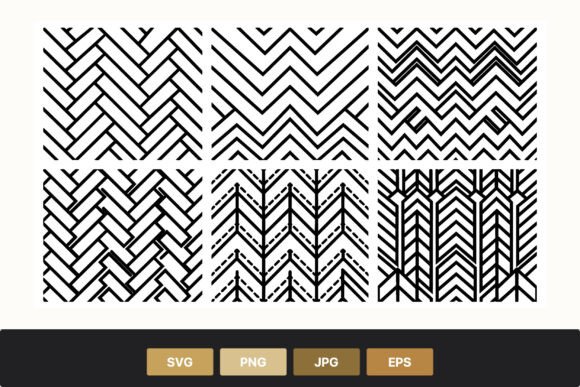
First impression? Clean. Confident. Quietly sophisticated. This isn’t a loud, trend-chasing pattern — it’s a set of six black-and-white seamless illustrations built around herringbone and chevron geometry, each varying line weight, spacing, and subtle dashed accents. There’s no color noise, no texture overlay, no forced “vintage” grain. Just precision, rhythm, and intentional negative space. It reads modern, minimal, and quietly premium — ideal for buyers drawn to architectural detail, Scandinavian interiors, gender-neutral nurseries, or elevated stationery brands.
The mood leans toward calm authority: think boutique packaging, yoga studio branding, minimalist wedding invites, or professional Canva templates for coaches and consultants. It won’t suit playful kids’ clipart bundles or rustic farmhouse wall art — but that’s a strength, not a limitation. Niche alignment matters more than broad appeal when you’re building a cohesive digital download shop.
In real selling scenarios, the Geometric Herringbone Chevron Pattern shines where structure and scalability matter. As an SVG design, it scales flawlessly for Cricut and Silhouette users — especially for tumbler wraps, tote bag repeats, or sublimation-ready mug backgrounds. As high-res PNGs (300 DPI, transparent background), it layers cleanly into printable wall art packs, planner sticker sheets, and greeting card templates. Because all six patterns are truly seamless, they tile without visible breaks — critical for large-format print-on-demand products like shower curtains or fabric yardage previews.
I tested it across eight common product types: SVG t-shirt graphics (paired with bold sans serif fonts), printable nursery art (scaled down to 8×10 with soft shadow mockups), Canva social media templates (used as subtle background textures behind quote text), digital paper packs (bundled with coordinating solids), Cricut sticker sheets (cut lines held crisp at 1.5" height), sublimation designs for ceramic mugs (no banding or aliasing), blog header graphics (blended with light opacity for visual hierarchy), and Etsy listing thumbnails (zoomed to 200×200px — still legible and distinctive).
Where it elevates product presentation: mockup previews gain instant polish. A plain white mug becomes editorial with one chevron repeat layered behind a centered monogram. Thumbnail appeal jumps because the geometry creates natural movement — guiding the eye instead of competing with it. Bundling all six patterns into a “Modern Geometric Bundle” strengthens perceived value, especially when paired with matching borders, frames, and icon sets. And for brand consistency? Use one pattern as your shop banner, another as your printable product background, and a third as a subtle watermark — all unified under the same visual language.
It works best in larger-scale applications: full-page printable layouts, wrap-around product mockups, tumbler and pillow case previews, and digital paper collections where repeat integrity is non-negotiable. It also performs well in social media promos — especially Reels and Pinterest pins — where clean, rhythmic motion reads clearly even at small sizes.
Use carefully in contexts demanding absolute simplicity or sharp contrast. Tiny sticker details (under 0.75") risk losing the dashed accents or thin-line variation. On dark backgrounds, test contrast — some versions rely on fine white lines that fade if not inverted properly. Avoid cramming it into text-heavy Canva templates; the pattern competes rather than supports. And while it cuts cleanly in most Cricut projects, always inspect the SVG paths before bundling — one version included optional interior dash breaks that required minor node cleanup for flawless cutting.
Practical seller notes I applied before publishing:
- Test-print all six patterns on matte and glossy paper — verify line clarity and no unintended halftone artifacts.
- Preview every pattern as a 200×200px Etsy thumbnail — does it read as “geometric,” “clean,” and “intentional” at that size?
- Check PNG transparency against both white and charcoal mockup backgrounds.
- Open each SVG in Inkscape and Illustrator — confirm path simplification, no stray points, and consistent stroke alignment.
- Organize files with clear naming: “Herringbone_Thin_Solid.svg”, “Chevron_Medium_Dash.png”, etc.
- Pair with font families: use serif (e.g., Playfair Display) for elegance, sans serif (Inter or Montserrat) for neutrality, and avoid script fonts unless used minimally for contrast.
- Confirm commercial license terms — this set includes unlimited commercial use for physical and digital end products, but always re-read the license PDF before listing.
For Etsy sellers launching seasonal collections, this asset fits seamlessly into Q4 “Modern Holiday” or Q1 “New Year Reset” bundles — think geometric gift tags, minimalist calendars, or neutral-toned digital planners. Print-on-demand sellers can drop it directly into Printful or Gelato templates with zero resizing headaches. Canva template sellers gain reusable background layers that feel custom, not stock. And crafters using Cricut Design Space appreciate how easily it adapts to vinyl, iron-on, and infusible ink projects — no tracing, no distortion.
What makes the Geometric Herringbone Chevron Pattern stand out isn’t novelty — it’s reliability. In a marketplace flooded with overdesigned clipart and low-resolution PNGs, this set delivers what serious digital product creators need: technical precision, thoughtful variation, and quiet versatility. It doesn’t shout. It structures. It supports. And in online selling, that kind of understated utility builds trust faster than any flashy headline.
If you’re curating a collection of professional-grade design assets — whether for your own shop or as part of a larger bundle — treat this as infrastructure, not decoration. Test it early. Use it intentionally. And let the geometry do the work.